
Assembly Adhesive Application Solution
Background and Issues: In automotive assembly workshops, glass adhesive application is a core process to ensure reliable sealing between windshields, side windows, rear windows, and the body. Traditional manual adhesive application relies on operators experience, with common problems such as large glue volume fluctuations (deviation up to ±15%–20%), low trajectory accuracy (error exceeding 0.5mm), and easy occurrence of glue leakage or overflow (rework rate about 3%–5%). These issues make it difficult to meet the flexible manufacturing requirements of multi-model line production. With the continuous development of automotive manufacturing towards high precision, high efficiency, and intelligence, robot intelligent adhesive application technology has become an important breakthrough for quality improvement and efficiency enhancement in the assembly process.
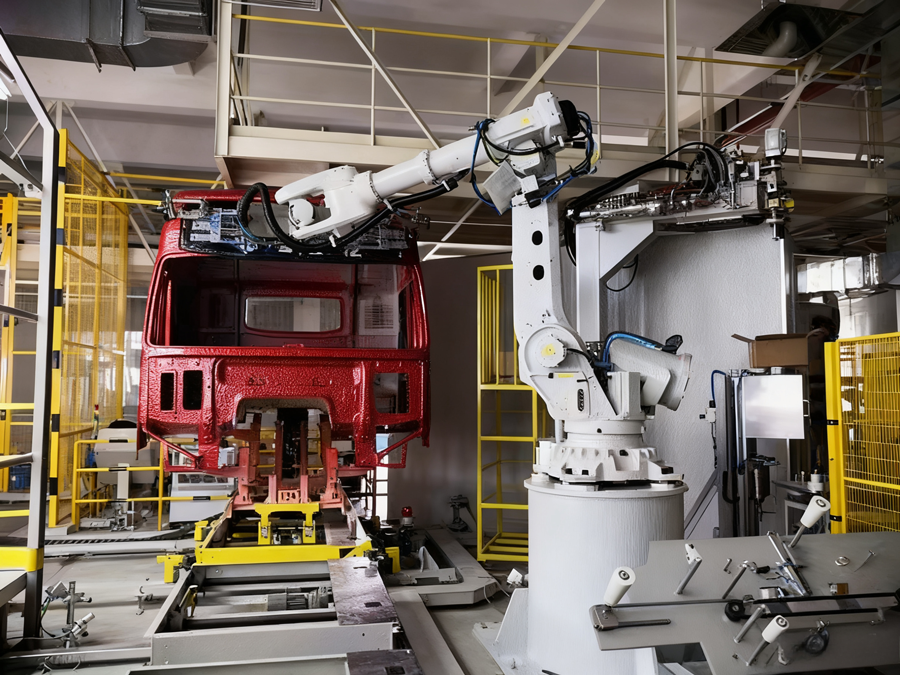
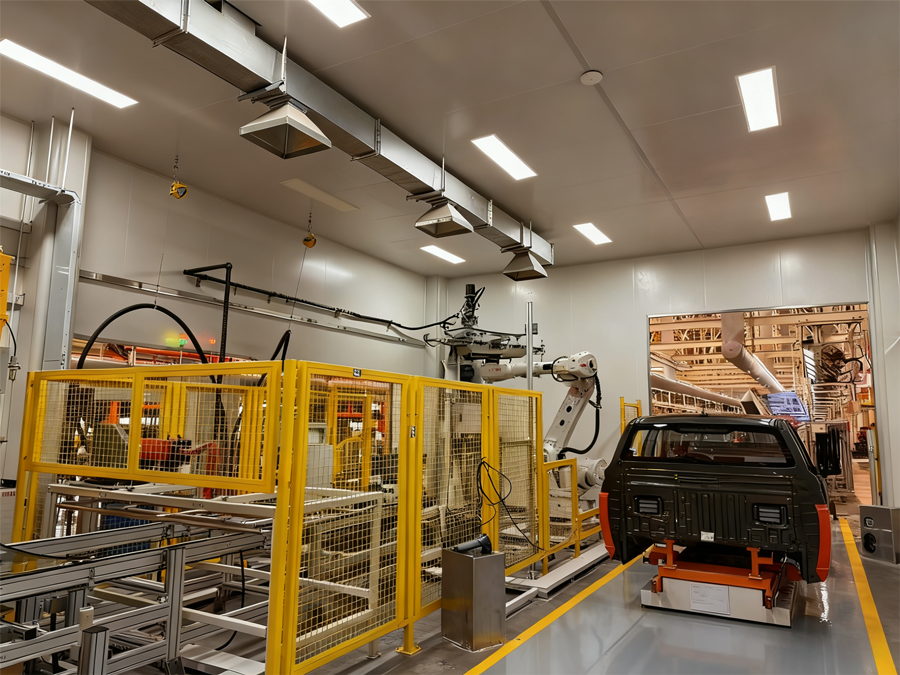
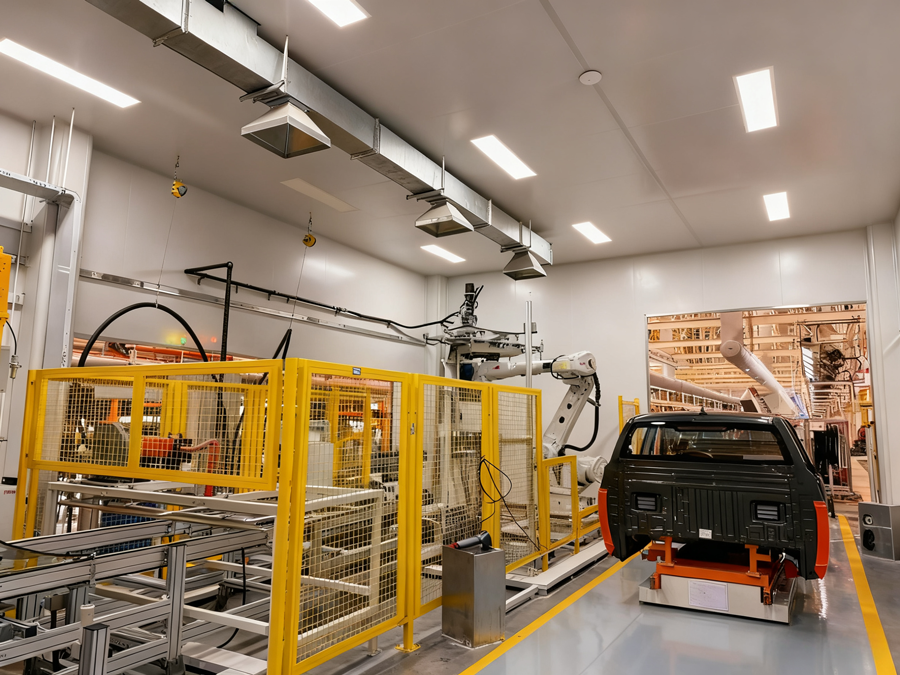
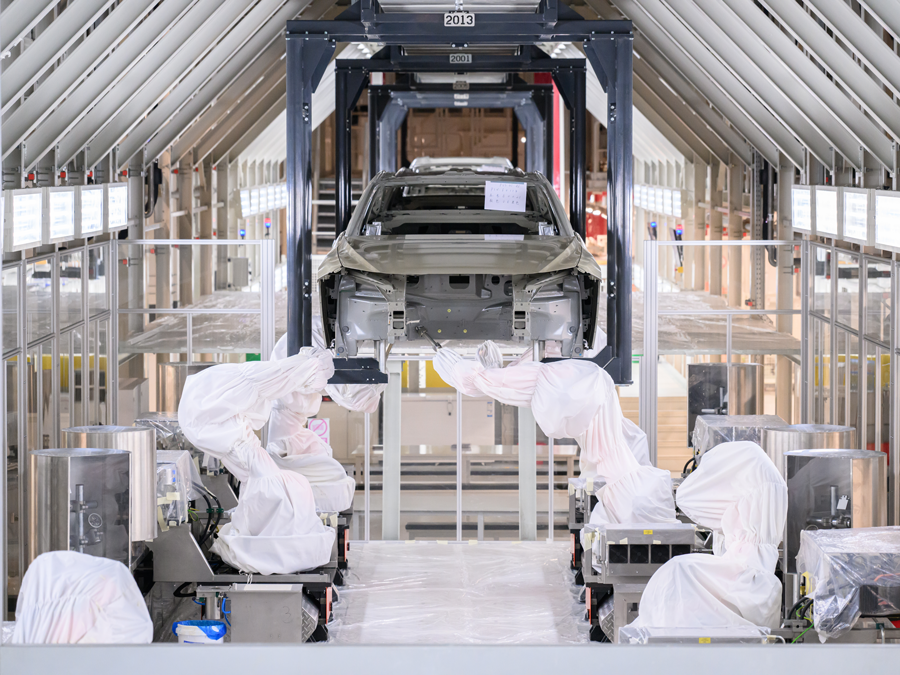
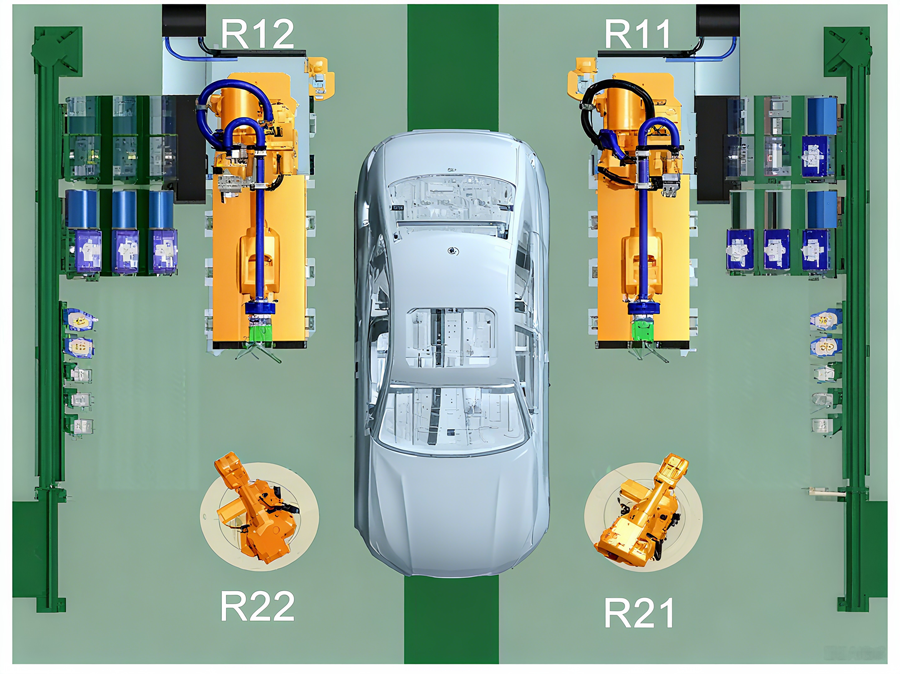
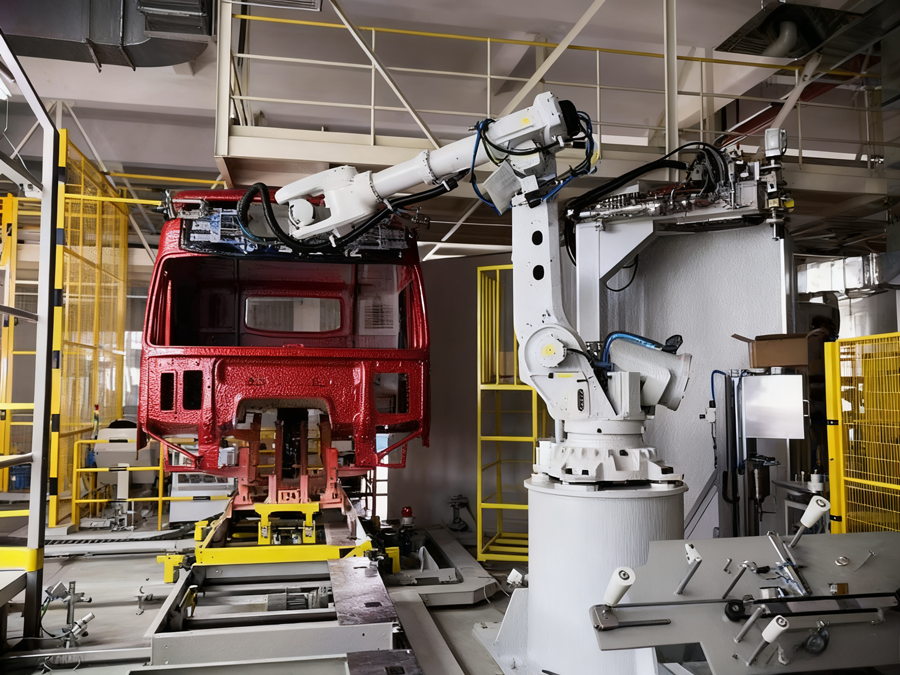
Core Solution and Principles: This solution deeply integrates industrial robot technology, visual perception, and intelligent control to construct a high-precision, highly reliable, and flexible glass glueing system. A six-axis industrial robot, coupled with a high-dynamic servo system, achieves a repeat positioning accuracy of ±0.1mm. Combined with 3D vision for real-time identification of glass models and poses, the system automatically invokes matching glueing programs. Through pressure sensors and flow valves, closed-loop control of glue quantity is realized; as the robot performs trajectory motion, the process system dynamically adjusts glue parameters in real time, ensuring consistency and reliability throughout the glueing process.
Core Innovation Points/Advantages:
• Ultra-High Precision Glueing: The robot is repeat positioning accuracy is ±0.1mm, with visual guidance trajectory deviation <0.2mm; glue quantity control error ≤±2%, glue thickness uniformity >95%. This significantly enhances sealing performance (waterproof and dustproof rating IP67), sound insulation (noise reduction of 10%~15%), and collision safety (80% reduction in glass detachment risk).
• Intelligent Flexible Adaptation: The vision system identifies glass models within 3 seconds, supports storage of parameters for over 50 vehicle models, and enables tool change time <5 minutes, adapting to multi-platform mixed-line production. It real-time perceives environmental temperature, humidity, and adhesive viscosity, automatically adjusting process parameters to ensure stable glueing quality.
• Full-Process Quality Control: Integrated with a 50MP camera and AI algorithms, the system real-time detects glue trace continuity, glue quantity uniformity, and overflow conditions, achieving 100% leak detection rate with inspection efficiency ≥120 seconds per unit. Full-process data traceability is supported, facilitating quality analysis and compliance with IATF 16949 and other certification systems.
Application Scenarios and Value: Suitable for passenger car/heavy-duty truck assembly workshops with annual production capacity of 100,000~1,000,000 units, supporting single-shift/double-shift continuous operation and high-pace production lines with ≥40 JPH. A single robot can glue ≥200 units per day. It is particularly suitable for special sealing requirements such as panoramic sunroofs in new energy vehicles and double-glazed windows in premium models. It can help enterprises save 3~5 laborers per line, reduce adhesive waste rate to ≤3%, control defect rate within 0.1%, lower comprehensive production costs by 15%~20%, improve production efficiency by over 30%, while enhancing line flexibility and data integration capabilities.
-
 Adhesive Application and Sealing Sol…
Background and Issues: Global competition in the automo…
-
 Foam and Wax Injection Solutions
Background and Issues: With the technological advanceme…
-
 Assembly Adhesive Application Soluti…
Background and Issues: In automotive assembly workshops…
-
 Welding Glueing Solution
Background and Issues: In automotive welding processes,…